You're Not Imagining It...And You Don't Have to Just Wait and See
If your memory, focus, or mental clarity haven’t felt quite like themselves lately, it’s worth taking a closer look, especially if dementia runs in your family.
Too often, women in their 50s and 60s are told to “keep an eye on it” or chalk it up to stress, menopause, or aging. Sometimes those factors are part of the picture. But sometimes there are other contributors worth looking at more closely - things like sleep issues, blood sugar dysregulation, nutrient deficiencies, medication effects, thyroid dysfunction, or other metabolic and inflammatory stressors that can affect how your brain feels and functions.
The goal isn’t to panic. It’s to look closer, sooner, so you know what you’re dealing with and what to do next.
That’s what the Better Brain Blueprint is built to do.

The truth about cognitive changes in midlife:
They’re common and you’re not the only one noticing them.
They do not automatically mean dementia.
They can be influenced by things like sleep, stress, hormones, blood sugar, nutrient status, medications, and vascular health.
Some of those contributors are modifiable when you identify them early.
Acting sooner gives you more opportunities to ID what’s contributing & make a plan.
You deserve more than “let’s just watch it” if something feels off.
That’s the work I do — helping you make sense of what may be contributing, so you can move forward with more clarity and a real plan.
Here's what often gets missed:
Many primary care visits simply don’t allow enough time to fully unpack why cognitive changes may be happening.
Basic workups don’t always explore the metabolic, nutritional, sleep, hormonal, vascular, or lifestyle contributors that can affect cognitive function.
The earlier you look more closely, the more opportunities you have to identify what’s modifiable and make a plan.

Why I Built This Work...
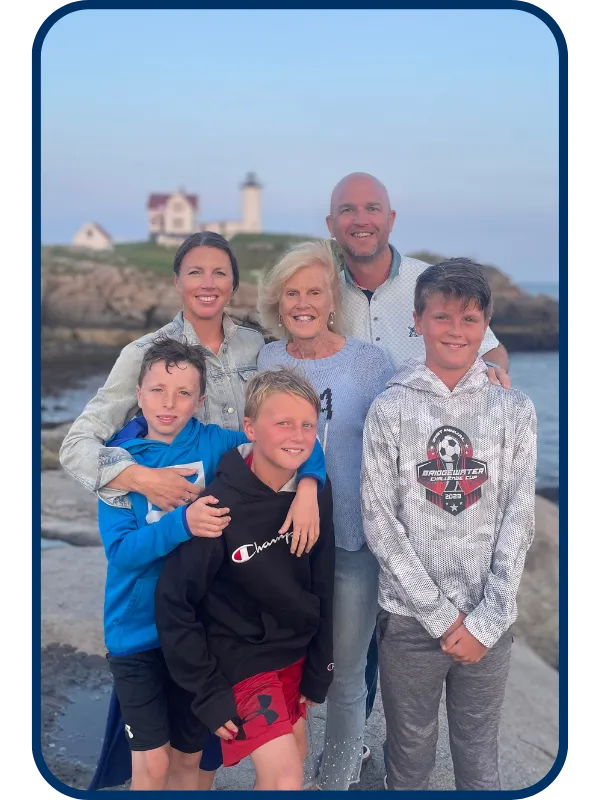
I didn’t build this practice from theory alone. I built it after more than 20 years in geriatric care, caring for patients and families living with cognitive decline — and seeing how often the early changes were minimized, brushed off, or addressed only after life had already gotten much harder.
I also built it from my own life. My mother lives with dementia, and I know what it’s like to sit on the family side of the table — to want answers, to wonder what could have been caught earlier, and to wish someone had looked more closely before things got harder.
That’s why I created the Better Brain Blueprint: to help women investigate cognitive changes thoughtfully, earlier, and with a broader lens than “just wait and see.”
The Better Brain Blueprint
The Better Brain Blueprint is the first step in helping you understand why your brain may not feel like itself and what deserves a closer look next.
Inside the Blueprint, we focus on four things:
A comprehensive clinical deep dive: We start with a 60-minute visit where we look closely at your symptoms, health timeline, family history, medications, sleep, stress, metabolic health, and the broader context around what’s been changing.
Cognitive screening: As part of the Better Brain Blueprint, we complete a virtual MoCA (Montreal Cognitive Assessment), a brief screening tool that helps us get a clearer picture of areas like memory, attention, language, and executive function.
The MoCA does not diagnose dementia or mild cognitive impairment on its own, and it’s only one piece of the picture. But it can help identify patterns that deserve closer attention and guide what next steps may make sense.
Foundational lab evaluation: From there, we use targeted lab testing (ordered through Quest) to look for common contributors to cognitive symptoms and brain fog, such as blood sugar issues, nutrient deficiencies, inflammation, thyroid dysfunction, and other metabolic imbalances.
A personalized plan and next-step roadmap: Once we have that first layer of information, I’ll create a personalized plan to help you address the biggest priorities I see, along with clear guidance on what should happen next — whether that’s lifestyle and nutrition support, deeper testing, follow-up with your PCP or a neurologist, or a more in-depth implementation phase with me.
The goal of the Blueprint isn’t to overwhelm you with testing or a generic list of recommendations. It’s to get a thoughtful, clinically grounded picture of what may be contributing, so you can stop guessing and start making decisions with more clarity.

Investment: $997
Common reasons women come to me for the Better Brain Blueprint:
brain fog that doesn’t feel like “just stress”
forgetfulness or word-finding issues that are starting to concern you
difficulty focusing, processing, or feeling mentally sharp
a family history of dementia that’s making you look at your own symptoms differently
a sense that your brain doesn’t feel like it used to — and you want a more thoughtful answer than “just monitor it”
That's the work I do — helping you find out what's actually going on, so you can act on it instead of just worrying about it.
Meet The Team
The Better Brain Blueprint is designed to give you both clinical insight and practical support. My role is to help you make sense of what may be contributing to the cognitive changes you’re noticing by looking closely at your symptoms, history, labs, and bigger picture so we can build a clear plan for what to do next.
Lyndsay’s role is to help you put that plan into real life. Through coaching support around food, routines, stress, sleep, and daily habits, she helps bridge the gap between knowing what to do and actually following through on it.
Together, we bring both pieces: a thoughtful clinical evaluation and practical support to help you move forward with more clarity and confidence.

Katie Creedon, MSN, APRN, NP-C, FMACP
I’m a board-certified nurse practitioner with more than 20 years of experience in geriatric care, including caring for patients with advanced dementia in long-term care settings.
I’m also certified in functional medicine, which shapes how I approach cognitive health: not just managing symptoms, but looking more closely at the metabolic, nutritional, sleep, hormonal, and lifestyle factors that may be affecting how the brain is functioning.
This work is personal, too. My mother lives with dementia, so I understand this not only as a clinician, but as a daughter and caregiver navigating it in real time.
I’m licensed in Massachusetts and New Hampshire and see patients virtually.

Lyndsay Hiller, FMCHC, Pn2
Lyndsay is a certified functional medicine health coach and trained in functional nutrition. After navigating her own years of digestive issues, hormonal symptoms, fatigue, and headaches, she discovered firsthand how powerful a root-cause approach can be.
Her work is grounded in helping women translate recommendations into real life through nutrition, lifestyle change, accountability, and compassionate support. Within the Better Brain Blueprint, Lyndsay helps patients begin implementing their plan in a way that feels practical, sustainable, and personalized
Is the Better Brain Blueprint right for you?
The Clarity Call is a 15-minute conversation to help us decide whether the Better Brain Blueprint is the right next step for your situation.
On the call, we'll briefly talk about:
What you've been noticing, and when it started
Your family history and any relevant context
whether the Blueprint makes sense as a first step, or whether another path — like seeing your PCP, neurologist, or sleep specialist first — would be more appropriate
This is not a pressure call. If the Blueprint isn’t the right fit, I’ll tell you.
This is likely a good fit if:
You're noticing memory, focus, or cognitive changes and want real answers — not just reassurance to "wait and see"
You have a family history of dementia and want to be proactive
You're open to a root-cause approach, including lab testing and lifestyle change
You're able to invest in this work outside of what insurance typically covers
You live in Massachusetts or New Hampshire and are looking for virtual support
It may not be the right fit if:
You’re experiencing sudden, severe, or rapidly worsening symptoms — you should be evaluated by your PCP or a neurologist promptly, and I’m happy to help point you in the right direction
You're looking for a quick fix rather than an in-depth process
You are over 65 & enrolled in Medicare
If this sounds like you, let's talk and find out together what's going on, and what you can do about it.
STILL NOT SURE?
Frequently Asked Questions
Will you do any cognitive testing as part of the Better Brain Blueprint?
Yes. As part of the Better Brain Blueprint, I include a virtual MoCA (Montreal Cognitive Assessment), which is a brief screening tool used to look at areas like memory, attention, language, and executive function.
The MoCA is not a standalone diagnostic test for dementia or mild cognitive impairment, and it doesn’t replace a full neurological or neuropsychological evaluation. But it can be a very helpful screening tool that gives us more information about what may deserve closer attention and helps guide next steps.
Does the MoCA diagnose dementia or mild cognitive impairment?
No. The MoCA is a screening tool, not a diagnosis. It can help identify patterns or areas of concern, but it must be interpreted in context alongside your symptoms, health history, lab work, and—when appropriate—further medical evaluation such as a neurological exam, imaging, sleep evaluation, or formal neuropsychological testing.
Do you diagnose dementia?
No — the Better Brain Blueprint is not a formal dementia diagnostic service. It’s a comprehensive evaluation designed to help identify possible contributors to cognitive symptoms and determine what next steps make sense, including when a neurologic workup or formal testing may be appropriate.
Will I need advanced testing?
Not necessarily. We start with your history, symptoms, cognitive screening, and foundational lab work. If I think deeper testing would be useful, I’ll explain why and we’ll talk through options before you decide on anything.
Do you take insurance?
I do not bill insurance for the Better Brain Blueprint. Some lab work may be run through Quest and may be covered depending on your insurance plan, but the Blueprint itself is a private-pay service.
Do you work with people outside Massachusetts and New Hampshire?
At this time, I work virtually with patients located in Massachusetts and New Hampshire.
What if I already saw my PCP or a neurologist?
That’s completely fine. The Better Brain Blueprint can still be helpful if you want a broader, more root-cause-informed look at what may be contributing to your symptoms and what you can do to support your brain health moving forward.
What happens after the Better Brain Blueprint?
The Better Brain Blueprint is designed as a first-step evaluation. Once we’ve reviewed your history, completed cognitive screening, and looked at your lab findings, I’ll give you a personalized plan and clear recommendations for next steps. For some women, that may be enough to move forward. For others, it may make sense to continue with implementation support, additional testing, or follow-up with another specialist. If additional support is recommended, we’ll talk through it clearly before you decide on anything.
If your brain doesn’t feel like itself and you’re tired of being told to “watch it” without a real plan, the Better Brain Blueprint was built for exactly this moment.
This is your chance to take a closer, more thoughtful look at what may be contributing — from sleep and stress to blood sugar, nutrient status, hormones, medications, and other root causes that are easy to miss when everything gets chalked up to aging.
You don’t need to keep guessing. Let’s figure out what deserves a closer look — and what to do next.


FOR SUPPORT ISSUES OR QUESTIONS, PLEASE EMAIL US AT [email protected]
Copyright © • Katie Creedon, PLLC • All Rights Reserved • Privacy Policy • Terms + Conditions • Refund Policy